ANALYSIS OF ASSIGNMENTS IN ENGLISH FOR NUSANTARA 9TH GRADE COURSEBOOK: ENCOURAGING INTERACTIVE LEARNING THROUGH TECHNOLOGY INTEGRATION
DOI:
https://doi.org/10.24235/lens.v2i2.25193Keywords:
English Language Coursebook, Interactive Learning, Technology Integration, Task AnalysisAbstract
This research is motivated by the dominance of traditional methods in English language learning in Indonesia which tend to make assignments monotonous and minimal interactivity and the use of technology as a learning medium. This study aims to identify assignments in the "English for Nusantara" book for grade 9 of the Merdeka Curriculum that encourage interactive learning through technology integration. The subjects of the study were assignments listed in five chapters in the "English for Nusantara" book for grade 9. The method used was descriptive qualitative research with a documentary study approach. The results of the analysis showed that there were 22 assignments that emphasized interactivity through various games and group discussions, 21 technology-based assignments, especially listening activities with audio media, and only 11 assignments that combined elements of interaction and technology such as making voice notes, vlogs, and digital poster campaigns. In conclusion, the integration of technology in school assignments can enrich the interactive learning experience but more integrated assignments need to be developed that combine social and digital aspects. Practical recommendations include increasing the number of hybrid interactivity-technology assignments and digital literacy training for teachers to optimize implementation in the classroom.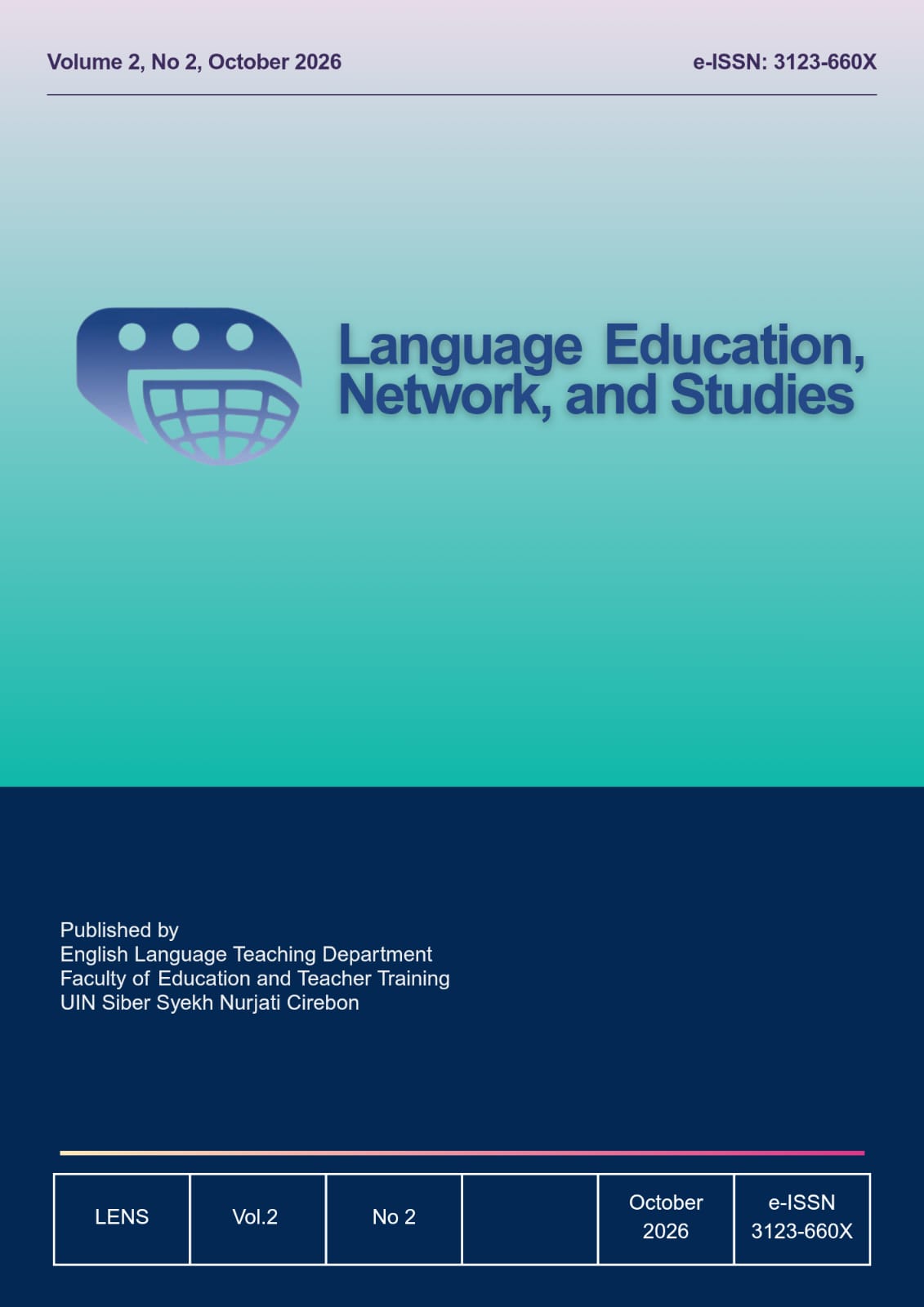
Downloads
Published
Issue
Section
License
Copyright (c) 2026 Alinda Noviyanti, Septi Gumiandari, Farouk Imam Arrasyid

This work is licensed under a Creative Commons Attribution-ShareAlike 4.0 International License.
Language Education Networks and Studies LENS respects that authors retain full copyright to their work. Upon publication authors grant the journal a non-exclusive license to publish and distribute the work under the Creative Commons Attribution ShareAlike 4.0 International License CC BY SA 4.0.
This license allows others to freely share adapt and build upon the work even commercially provided that proper credit is given to the original authors and the journal and any derivative works are shared under the same license terms.
Authors remain free to reuse share and distribute their work independently such as posting in repositories or websites with acknowledgment of the original publication in LENS.