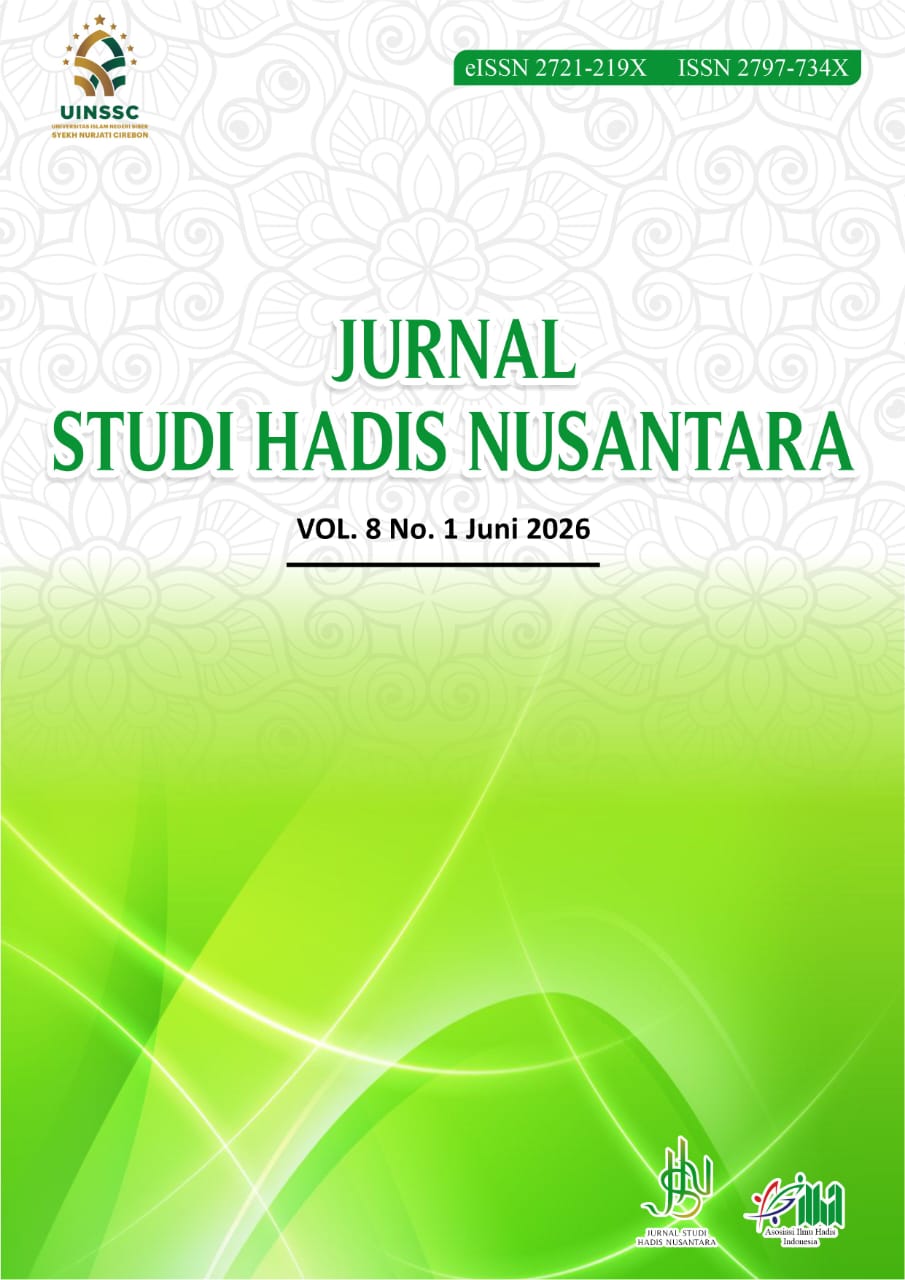
Doomscrolling As A Waste Of Time: The Relevance Of Prophetic Hadith On Time Management In The Digital Era
DOI:
https://doi.org/10.24235/r6gkja42Abstract
This study examines the phenomenon of doomscrolling as a compulsive habit of scrolling through digital device screens to excessively consume negative content in the digital era. This phenomenon is an important issue because technology, which should facilitate access to information, can instead lead users to waste productive time, reduce focus, and experience mental health problems. This study aims to analyze doomscrolling as a form of time wasting and to examine its relevance to the Prophet’s hadith on time management. This research employs a qualitative approach based on library research using the thematic hadith method. The primary data consist of hadiths found in the Kutub al-Sittah, while the secondary data are derived from modern scholarly literature on doomscrolling, mental health, social media, and digital literacy. The findings show that the Prophet’s hadith concerning two blessings often neglected by people, namely health and free time, is strongly relevant to the phenomenon of doomscrolling. The hadith functions as an ethical foundation that emphasizes time and health as trusts from Allah that must be utilized for productive activities, acts of worship, and benefits for others. This study contributes to linking thematic hadith studies with contemporary digital issues, particularly self-control and Muslim time management on social media. Thus, doomscrolling can be understood as a form of negligence toward the blessings of time and health, which may place human beings in a state of loss, as warned in the Prophet’s hadith.
Keyword: Doomscrolling; Time Management; Prophetic Hadith; Time Wasting; Digital Era.
Downloads
Published
Issue
Section
License
Copyright (c) 2026 Ajeng Sekar Ayu, Muhammad Ghifari, Muhammad Asgar Muzakki

This work is licensed under a Creative Commons Attribution 4.0 International License.
- Authors retain copyright and grant the journal right of first publication with the work simultaneously licensed under a Creative Commons Attribution License that allows others to share the work with an acknowledgement of the work's authorship and initial publication in this journal.
- Authors are able to enter into separate, additional contractual arrangements for the non-exclusive distribution of the journal's published version of the work (e.g., post it to an institutional repository or publish it in a book), with an acknowledgement of its initial publication in this journal.
- Authors are permitted and encouraged to post their work online (e.g., in institutional repositories or on their website) prior to and during the submission process, as it can lead to productive exchanges, as well as earlier and greater citation of published work.
This work is licensed under CC BY 4.0