MAKE A SUBMISSION

OUR TEAM
EDITORIAL POLICIES
ARTICLE TEMPLATE

I S S N (PRINT)
I S S N (ONLINE)
SUPPORTING TOOLS



RESPEC INDEXED BY




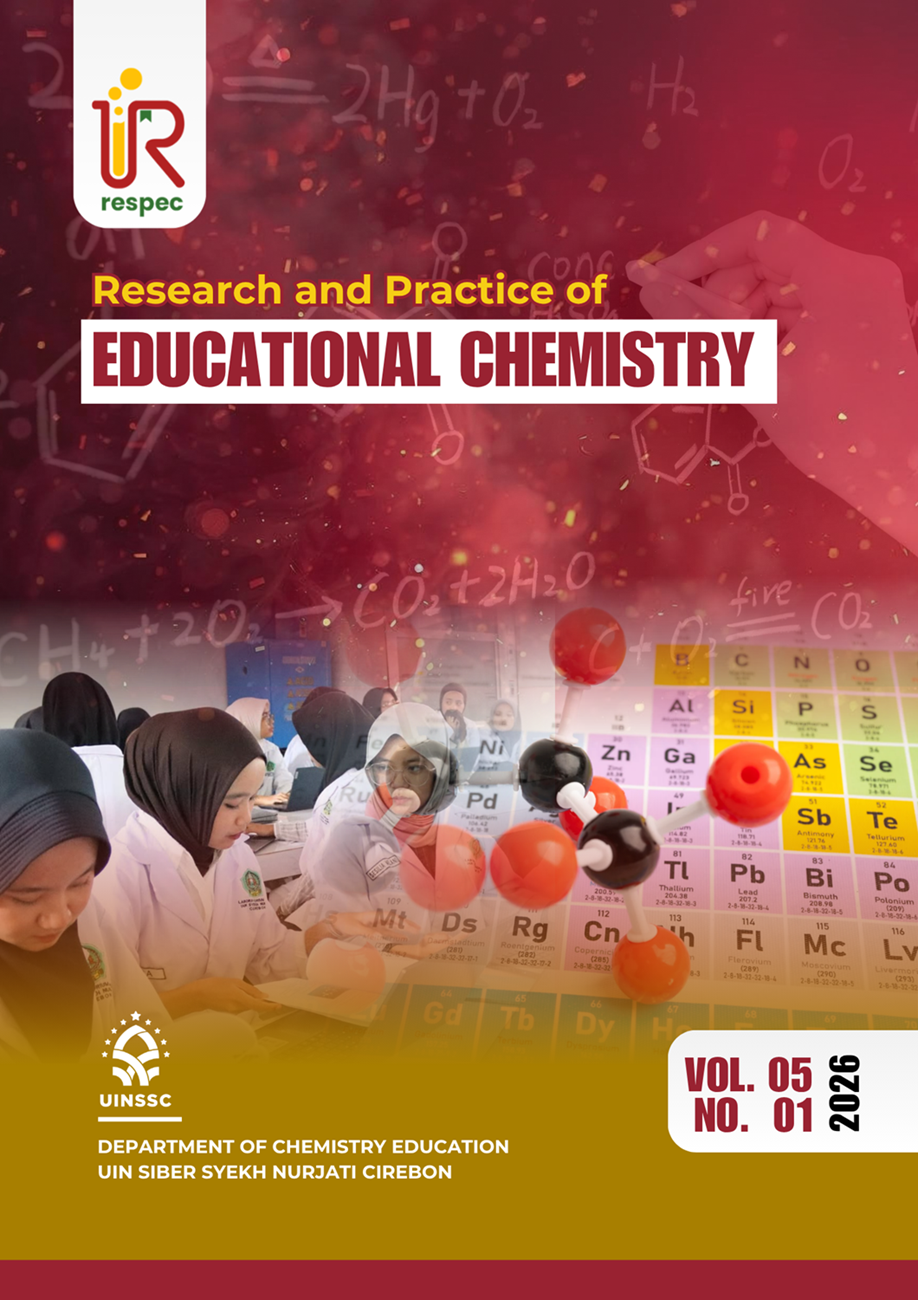 Research and Practice of Educational Chemistry (RESPEC) is a peer-reviewed, open-access scholarly journal published by the Department of Tadris Kimia, Universitas Islam Negeri (UIN) Siber Syekh Nurjati Cirebon, Indonesia. Established in 2022, the journal is published biannually in June and December.
RESPEC publishes original research articles, review articles, short communications, development studies, theoretical analyses, and scholarly ideas in the fields of chemistry education and chemistry. Its scope covers chemistry teaching and learning, curriculum and instructional design, assessment and evaluation, laboratory-based learning, instructional media and learning technologies, students’ misconceptions and conceptual understanding, teacher professional development, and research in pure and applied chemistry, including organic, inorganic, analytical, physical, biochemical, environmental, and natural product chemistry.
The journal serves as an academic platform for researchers, lecturers, teachers, graduate students, and practitioners to disseminate scientific findings and innovative ideas. Through open access publication, RESPEC supports the advancement of chemistry education, chemical sciences, and evidence-informed practices in science learning.
| Journal title | Research and Practice of Educational Chemistry (RESPEC) |
| Initials | RESPEC |
| Frequency | 2 issues per year |
| ISSN | 2988-2567 |
| DOI | Prefix by isi prefix DOI di sini |
| Editor-in-Chief | Idha Ayu Kusumaningrum, M.Pd |
| Publisher | Department of Tadris Kimia, UIN Siber Syekh Nurjati Cirebon |
| Citation | Google Scholar |
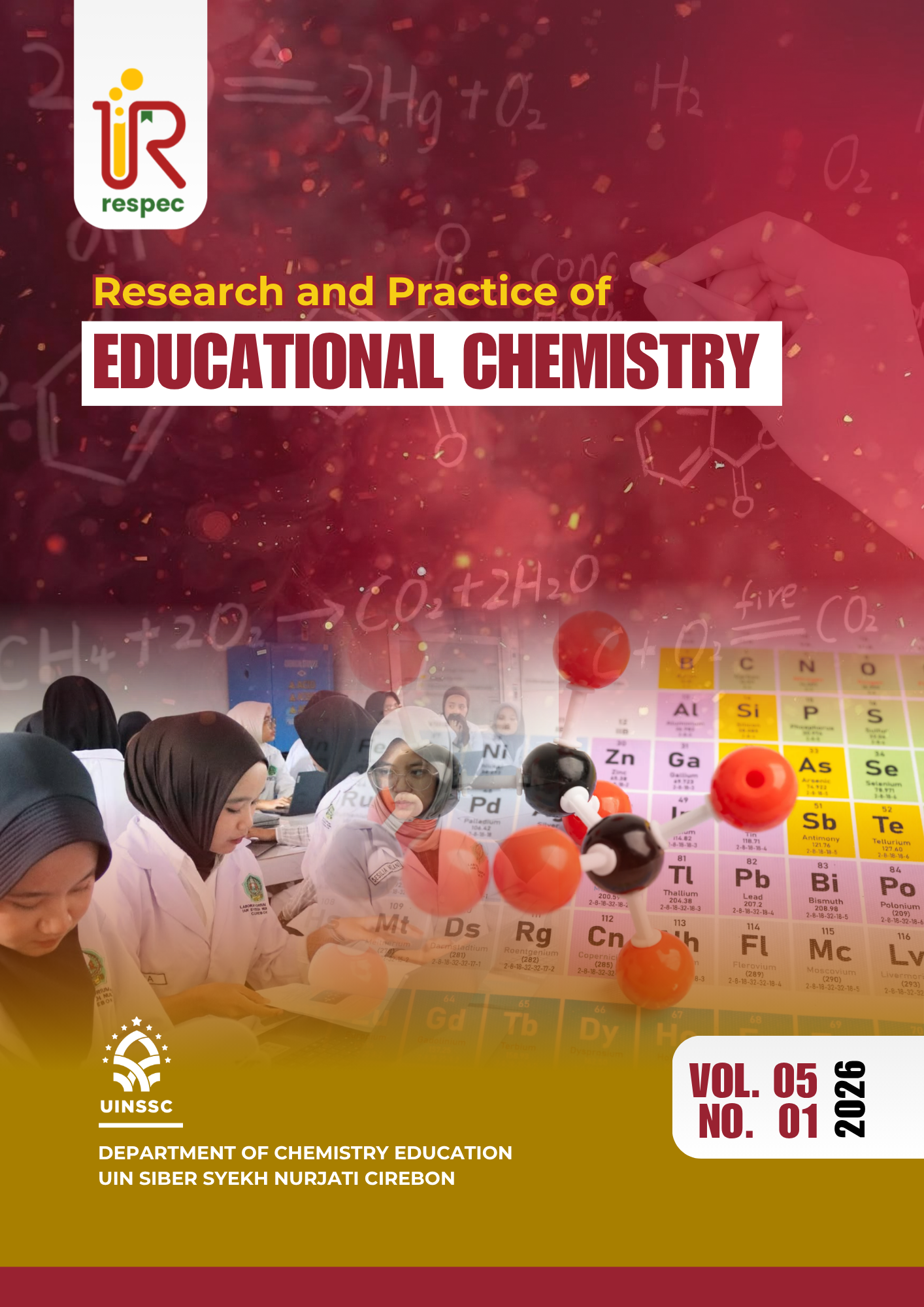
This issue presents five articles addressing chemistry education and applied chemistry practices, ranging from analyses of chemistry content structure in the Merdeka Curriculum, the alignment of Thermochemistry materials with 21st-century skills and IUPAC standards, and teachers’ readiness in responding to limited instructional time, to a simple experimental study on compound distribution in green and black tea using RGB color analysis and a molecular docking study of galangal compounds against SARS-CoV-2 Mpro. Overall, this issue reflects an effort to promote more contextual, adaptive, and research-oriented chemistry learning through curriculum studies, classroom innovation, simple laboratory inquiry, and computational approaches.


